Backpacking Basics: A Beginner's Guide to Overnight Hiking
Plan a first overnight hike with a modest route, a suitable sleep system, navigation, food and water planning, and campsite rules to verify locally.
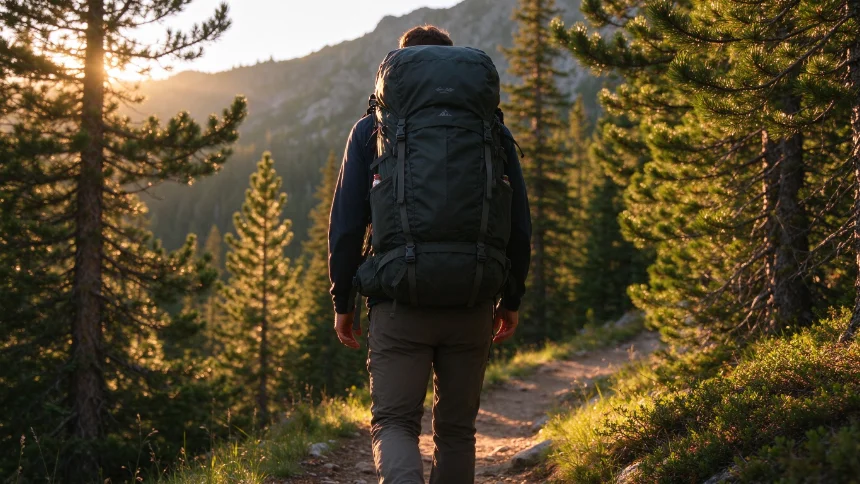
An overnight hike adds a sleep system, more food, and a campsite plan to a day hike. For a first trip, choose a short route you already understand, then check the current rules and conditions with the land manager before packing.
Start Small
Choose a route whose distance, elevation, surface, weather exposure, and daylight fit your group’s experience and loaded-pack pace. A short walk to a reservable campground can be a sensible first overnight; a remote route with a water source is not automatically easier. Confirm that overnight camping is permitted and that the site is open.
The goal of your first trip isn’t to cover miles. It’s to test your gear, practice setting up camp, and figure out what you actually need versus what you just thought you’d need.
The Core Gear You Can’t Skip
You don’t need the most expensive gear to start. But there are a few essentials you shouldn’t skimp on.
| Category | What You Need | Notes |
|---|---|---|
| Shelter | A tent or tarp | Borrow or rent if you’re unsure |
| Sleep | Sleeping bag + pad | Pad is not optional — it insulates |
| Pack | A pack large enough for the complete planned load | Match its fit and capacity to your kit |
| Water | Capacity and treatment method suited to the route | Check whether sources are reliable and open |
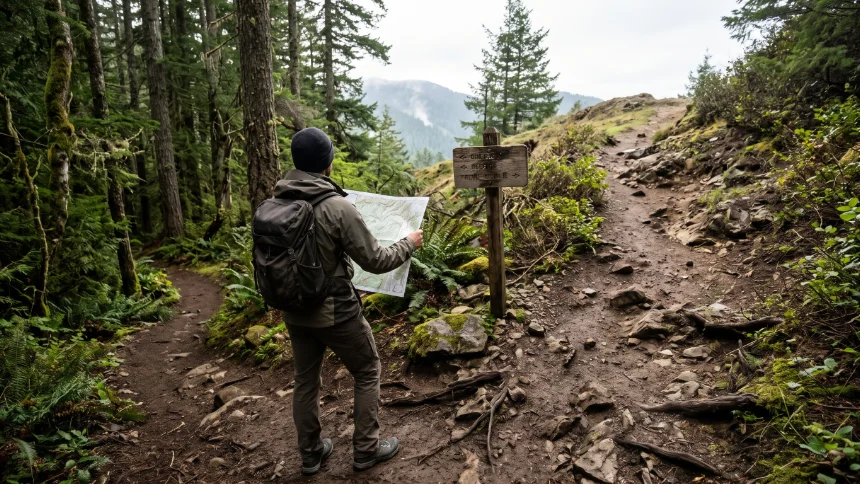
| Navigation | Map and a way to use it; backup suited to the route | Do not depend on cell service alone |
Cooking equipment, food storage, and other trip-specific items depend on the campsite rules, weather, and whether you will prepare food. Do not omit items required by the area or the route just to use a shorter list.
Plan Your Route and Campsite
Before you leave, know where you’re going. Download a map, tell someone your plan, and check the weather.
Pick a campsite that’s legal to use. Permits, food storage, fire rules, water treatment, and waste disposal vary by land manager and area. Read the current local rules, rather than carrying a generic distance or assuming every map-marked site is open.
Keep the route conservative enough that you can carry the loaded pack at your usual pace and still reach camp with daylight to spare. Choose distance from terrain, elevation, conditions, and group experience rather than relying on a standard mileage.
Pack Smart
How you pack matters as much as what you pack.
Heavy items (tent, sleeping bag, food) go close to your back and high up. Lighter items go lower. Things you need quick access to — snacks, rain jacket, sunscreen — go in the side pockets or the top lid.
There is no single pack-weight percentage that works for everyone. Load the pack with the gear, food, and water you actually plan to carry, then test the fit and walk with it before leaving. If the load changes your balance, causes pain, or is more than you can manage comfortably, shorten the route or reduce nonessential items.
Food and Water
Plan meals that fit the trip length, food-storage rules, and your group’s needs. A stove may be useful or required for a particular plan, but campfire and stove rules vary; check them before leaving and never use a stove inside a tent.
Plan water around the route, forecast, effort, and confirmed sources. Carry enough for the sections without reliable water and bring a treatment method only if you know how to use it and local sources can be treated. Do not assume a stream will be flowing or safe to drink.
Leave No Trace
Pack out food scraps and rubbish. Follow the specific area’s campsite and waste rules; where Leave No Trace guidance applies, camp and dispose of waste well away from water, trails, and other camps. The National Park Service trip-planning guide explains route checks and trip plans, while its Leave No Trace principles give broader low-impact guidance. Local rules take precedence.
The First Trip Is About Learning
Your first backpacking trip won’t be perfect. You’ll forget something, your pack will feel too heavy, and you’ll probably overthink a few things. That’s normal.
Go with someone who has experience if you can. Ask questions, take notes, and don’t worry about looking like a beginner. Everyone starts somewhere.