How to Hike Comfortably While Pregnant
Plan a lower-risk walk during pregnancy by discussing activity with your prenatal care team and adapting route, pace, heat exposure, and turnaround plans.
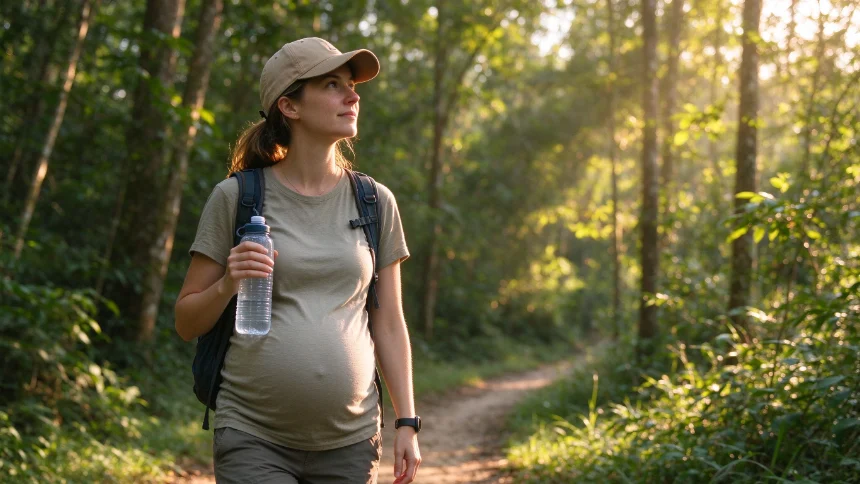
Whether a hike is appropriate during pregnancy depends on the person, pregnancy, route, and conditions. This page offers planning questions, not medical clearance. Discuss your activity plans with your obstetric care provider, especially before starting a new or more demanding routine.
Every pregnancy is different. Some people feel great and keep going. Others feel like their usual three-mile loop is a mountain. Both are fine. Here’s what helps make hiking more comfortable when you’re expecting.
Plan for water and temperature
Bring water and plan where you can refill, if reliable sources exist. Needs vary with the person, effort, and weather; this article cannot set an individual target or recommend electrolyte products. A tube or bottle is a convenience choice, not a safety measure. Avoid strenuous activity in high heat and humidity, and choose a cooler time or postpone when conditions warrant it.
Bring food you can comfortably eat
Pack familiar food for the length of the outing and a little flexibility if the route takes longer than expected. Appetite and food tolerances vary during pregnancy. Follow any individual food guidance from your prenatal care team; there is no universal snack schedule for a hike.
Slow Down and Take More Breaks
Take breaks whenever you want and keep a pace that feels comfortable. If you become unwell, stop the activity and follow your clinician’s advice. A companion and a clear return plan can make it easier to shorten the outing.
Plan bathroom stops and check the land manager’s waste rules before leaving. Carry supplies only as appropriate for the route and local regulations.
Plan Shorter Trips
Choose a route whose surface, distance, elevation, shade, and exit options suit how you feel that day. Pregnancy can change balance and exercise tolerance, so avoid terrain or activities with a substantial fall risk and leave room to turn around early. A familiar paved or smooth park loop may be a more manageable outing than a remote, exposed trail.
It’s okay to cancel or modify plans. The goal isn’t to prove anything — it’s to enjoy being outside without pushing too hard.
Choose Your Hiking Partners Well
Bring people who are patient and supportive. You want someone who doesn’t mind if you slow down, who will help carry gear, and who won’t make you feel bad for turning back.
Let Others Help Carry the Load
Travel with someone you trust, tell another person where you plan to go, and choose a route with a straightforward way back. Share the water, food, and group gear if that makes the walk more comfortable, but do not assume reducing pack weight makes a route suitable for every pregnancy.
Dress for the Body You Have That Week
Your body changes week to week. Clothes that fit one trip might feel tight the next. Wear stretchy, breathable layers, and don’t be afraid to adjust or swap gear as you go.
Remember Why You’re Out There
Hiking while pregnant isn’t about miles or summits. It’s about getting outside, moving your body, and enjoying time before the baby arrives. Keep it simple, listen to your body, and give yourself permission to take it easy.
Stop exercising and contact your obstetric care provider if you have warning signs such as vaginal bleeding, dizziness or faintness, chest pain, headache, muscle weakness affecting balance, calf pain or swelling, regular painful contractions, or fluid leaking. ACOG’s exercise during pregnancy guidance covers activity, heat, hydration, altitude, and warning signs; use it with advice from your own care team. This article is not a substitute for individualized guidance.