Hiking Basics: A Beginner's Guide to Your First Trail
A first-trail overview covering route choice, footwear, layers, basic supplies, and a simple plan for changing or ending a hike.
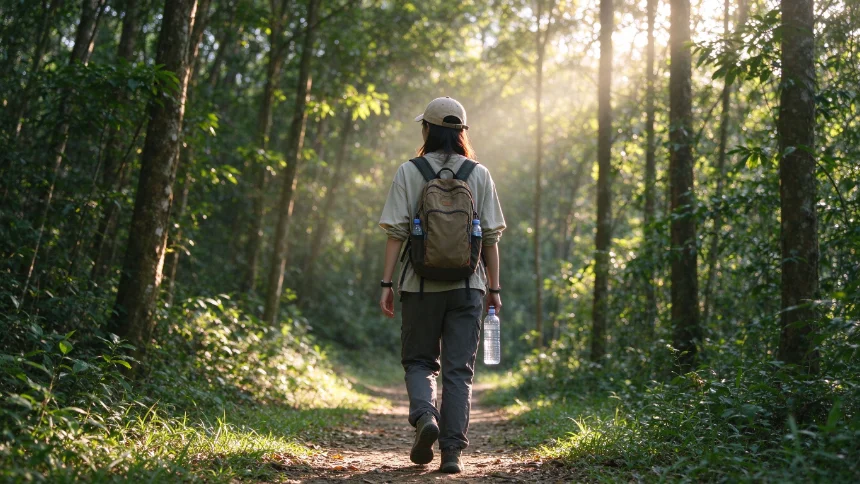
For a first outing, the useful questions are modest: is the route open, can your group manage its terrain and distance, and do you have the layers, navigation, food, and water that conditions call for? A checklist supports the plan; it cannot make every trail suitable for every beginner.
This guide covers the essentials for new hikers: what to wear, what to pack, and how to plan your first trip.
Start with an Easy Trail
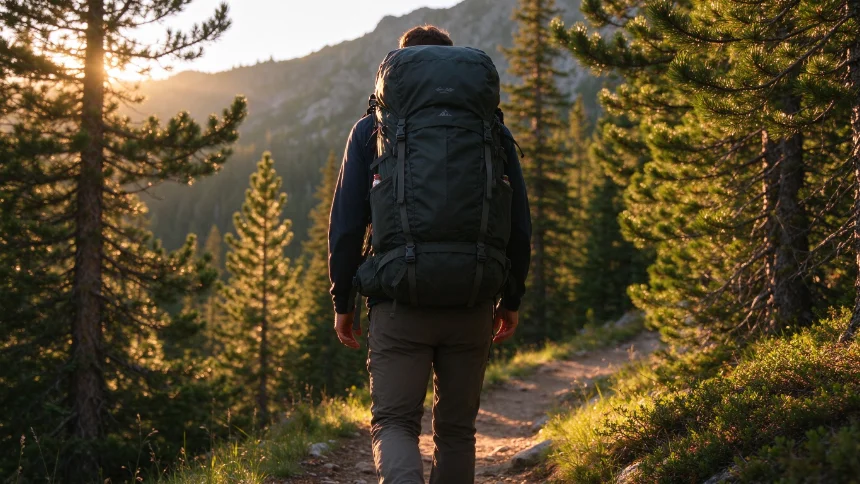
Choose a short route with terrain and elevation that match your group’s current walking experience. Check the land manager’s current notices, expected weather, daylight, access, and return options. Distance alone is not a measure of difficulty; steepness, footing, exposure, and route-finding matter too.
The goal is to get a feel for walking on uneven ground, carrying a small pack, and being outside for a few hours. You can tackle longer routes later.
Wear the Right Shoes
This is the one thing that makes the biggest difference. A worn-out pair of running shoes won’t give you the support you need on rocky or uneven trails.
Wear comfortable, secure footwear with a sole suited to the surface. A boot is not automatically better than a hiking shoe or trail runner, and ankle support is not a universal requirement. Avoid worn soles or footwear that causes pain; try new footwear on shorter outings before relying on it for a longer route.
Dress in Layers
Weather changes fast on the trail. Morning chill, midday sun, and afternoon rain can all happen in one hike.
Wear moisture-wicking clothes, not cotton. Cotton holds sweat and stays wet, which makes you cold. Bring a light jacket or rain shell, even if the forecast looks clear.
Pack the Ten Essentials
There’s a standard list of things every hiker should carry. You don’t need all of them for a short walk, but it’s good to know what they are.
| Essential system | Examples to consider for this route |
|---|---|
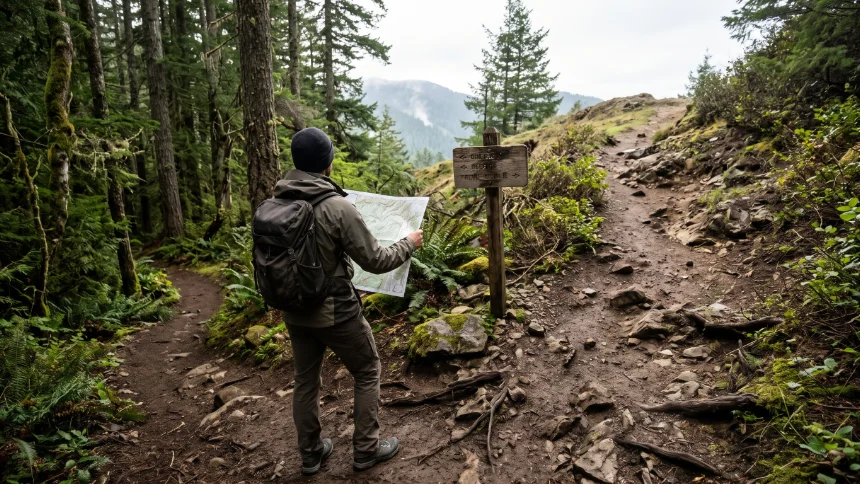
| Navigation | Map, compass, or GPS device you know how to use; do not count on cell service alone |
| Sun protection | Hat, sunglasses, and sunscreen suited to the conditions |
| Insulation | An extra layer for expected temperature and weather changes |
| Illumination | Headlamp or flashlight, with a power backup where appropriate |
| First aid | A kit matched to the group and outing, including personal medication |
| Fire | A fire-starting option only where legal and appropriate |
| Repair kit and tools | Small items matched to the gear and route |
| Nutrition and hydration | Food and water planned for the outing, plus treatment if you use natural sources |
| Emergency shelter | A lightweight option appropriate to the route and weather |
| Communication | A way to contact help appropriate to the route; tell someone your plan |
The National Park Service groups these ideas as the Ten Essentials and explains that needs depend on the park, activity, and conditions. Use the list as a planning framework, then add personal and activity-specific items.
Tell Someone Your Plan
Before you leave, share your route and expected return with a trusted contact. Check local closures and alerts, and shorten the plan or turn around if the route, weather, or group’s condition changes. See the NPS trip-planning guide for a planning framework; check the relevant local land manager for current notices.
Take It Slow
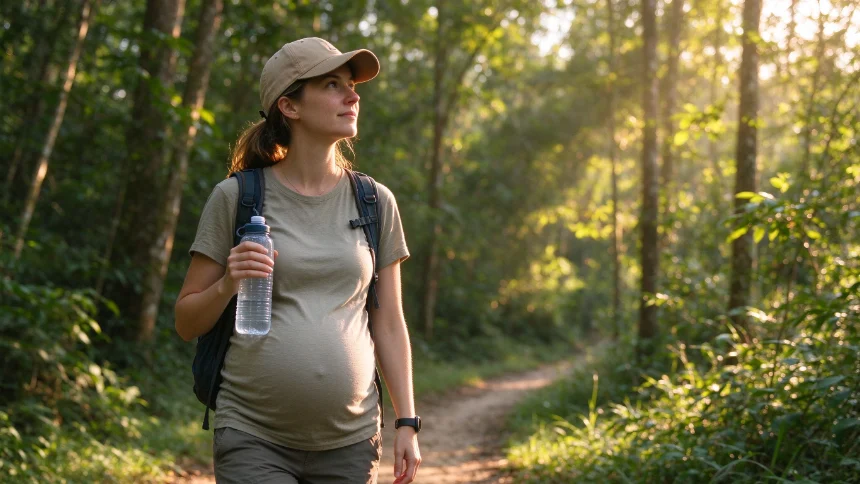
Hiking isn’t a race. Take breaks and drink according to your needs and conditions. Plan water based on the route and confirmed refill options rather than using a fixed amount for everyone.
If someone feels unwell, conditions worsen, or the group is losing daylight, stop and reassess. Turn back when continuing no longer fits your plan or experience.
Leave No Trace
Pack out everything you bring in. Don’t leave trash, don’t pick plants, and stay on the trail. The outdoors belongs to everyone, and it’s up to all of us to keep it clean.
The First Hike Is Just the Start
Your first hike won’t be perfect. You’ll forget something, you’ll get tired, and you’ll probably overpack. That’s normal.
Go with a friend who has experience if you can. Ask questions, take notes, and don’t worry about looking like a beginner. Everyone starts somewhere, and the trail is waiting for you.