How to Inspect, Clean and Store Your Climbing Harness
Check, clean, and store a climbing harness using its maker's instructions, and ask a competent inspector about uncertain retirement decisions.
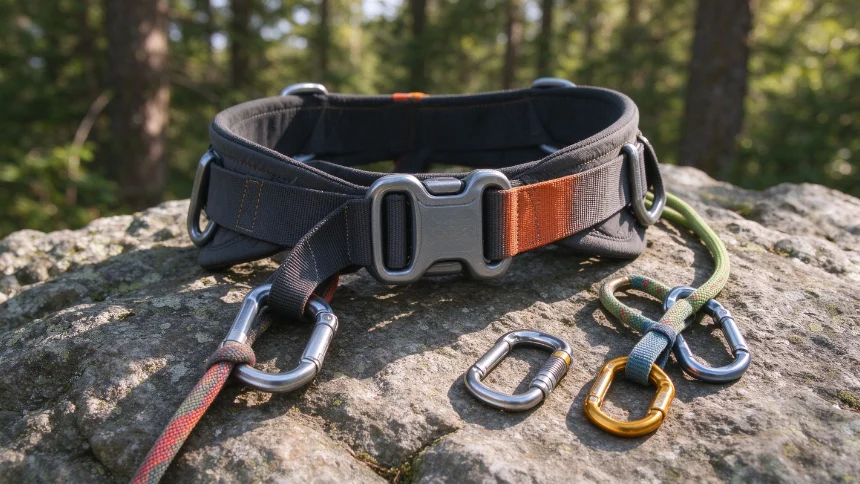
Your harness is life-safety equipment. This overview cannot determine whether any individual harness is safe to climb in. Read the instructions for its exact model, inspect it before use as directed, and have any uncertain condition assessed by a competent person before the next climb.
Routine Harness Inspection
A quick pre-use check should follow the harness maker’s inspection procedure and include webbing, stitching, tie-in points, belay loop, buckles, and leg-loop or waist-belt adjustment. Look for cuts, damaged stitching, deformation, chemical contamination, or anything outside the examples in the model’s instructions. A general page cannot define acceptable wear for every harness.
Some models include wear indicators or inspection features, but they are not universal and do not replace the complete inspection process. Use only the features described in the exact model’s instructions.
There is no single retirement age or annual replacement schedule for every harness. Lifespan depends on the maker’s stated limit, manufacture date, use, storage, exposure, and product history. For example, Petzl’s equipment-lifetime guidance applies to Petzl equipment; it is not a rule for another brand.
If the harness took a major fall or load, was exposed to chemicals or damaging heat, has an unknown history, fails its inspection, or leaves you unsure, remove it from service and follow the maker’s retirement instructions. Do not decide that it is safe based on appearance alone. Petzl’s inspection procedure shows why model-specific inspection matters.
Safe Cleaning Practices
You don’t need to wash your harness after every single climb. Start with a plain water rinse to wash away chalk, dirt and trail grit first. More stubborn grime will require gentle hand-washing.
Use only the cleaning method and products permitted in the harness manual. Do not use solvents, stain removers, degreasers, or unapproved bleach. Petzl’s harness-washing guidance warns that many cleaning products are incompatible with nylon; other manufacturers may specify different methods.
Dry and store the harness exactly as its maker instructs. Keep it away from damaging heat, chemicals, and prolonged UV exposure; do not put it away damp or leave it in a hot vehicle.
Transport and Proper Storage
Use the original storage bag if one came with your harness. Keep it separated from sharp gear: ice screws, crampons and jagged carabiner edges can nick and cut webbing without you noticing.
Stay clear of corrosive substances too. Battery acid, gasoline, solvents and bleach will eat away at fabric strength. If you don’t have the original bag, a basic lightweight stuff sack works fine as a low-cost alternative.
Keep the instructions and purchase or use history with the harness where practical. Store it protected from abrasion and contamination. If you cannot establish its history or have doubts after inspection, do not climb on it; contact the manufacturer or a competent climbing-equipment inspector.