How to Choose a 4-Season Tent for Winter Camping
Compare tent capacity, carried weight, structure, ventilation, and intended winter conditions before deciding whether a four-season shelter fits your trips.
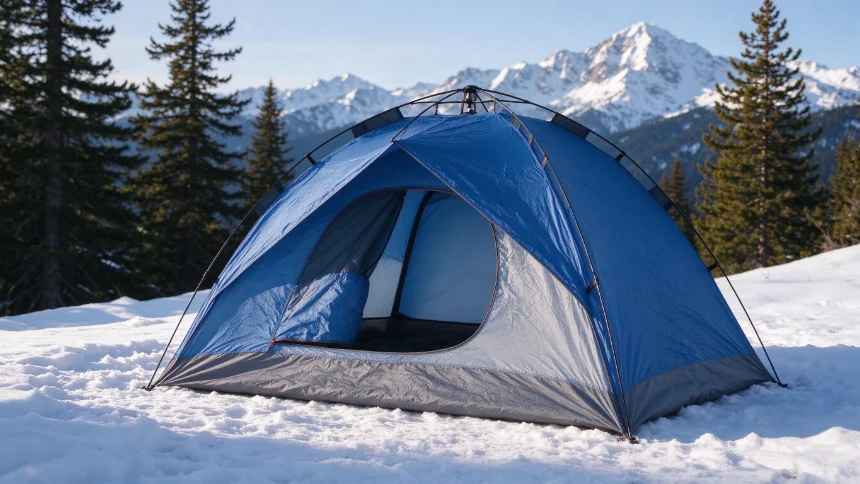
A four-season label does not make a tent suitable for every winter trip. Match the specific tent’s intended conditions, structure, ventilation, and setup to the forecast and site; a shelter is only one part of a winter plan.
But these tents are a serious investment. They’re expensive, heavier and bulkier than 3-season models. So before you buy, make sure you actually need one. Here’s what to think about.
Do You Really Need a 4-Season Tent?
A 4-season tent makes sense if you camp in winter, at high altitude, or in exposed alpine terrain where wind and snow are expected. If you only camp in mild weather, a 3-season tent is lighter and cheaper.
| Tent category | Questions to answer before choosing |
|---|---|
| Three-season | Does the maker rate this model for the wind, rain, and temperatures expected on your route? |
| Four-season | Does the model’s intended use match expected wind and snow, and can you pitch and anchor it at the actual site? |
Be honest about where you’ll camp. A 4-season tent that sits in your closet for eight months a year isn’t a good buy.
Pick the Right Capacity
Compare the maker’s stated capacity with the sleeping pads and personal gear you will bring. Published capacity does not guarantee that two people and winter equipment will feel spacious.
A 1-person tent is lightest and most packable, but you’ll feel cramped if you’re tall or carry lots of gear. A 2-person tent gives you room to stretch out and store gear inside, but it’s heavier and bulkier.
Try the layout where possible, and check whether vestibules, doors, and internal length fit your group and sleep system.
Balance Weight and Durability
Compare packed weight for the exact model, including the poles, stakes, footprint if needed, and any pieces required for the conditions. Do not infer storm strength from weight alone.
Think about how you’ll carry it. If you’re backpacking miles in, every ounce matters. If you’re car-camping at a ski trailhead, weight matters less.
Look at the Structure
A good 4-season tent has a few key design features that help it survive storms.
Pole geometry, fabric, guy points, and correct anchoring all matter, but no broad shape label guarantees a safe pitch in a storm. Read the specific manual and practice setup before a trip. If the forecast or exposed site is beyond your experience or the tent’s stated use, choose a lower-risk plan or postpone.
Vestibules are important too. They give you a place to store boots and gear outside the sleeping area, and they add a buffer against wind. A dual-vestibule tent lets two people enter without crawling over each other.
Check the Ventilation
People and damp equipment add moisture inside a tent; condensation can form and freeze in cold conditions. Use only the ventilation the tent maker recommends for the weather and setup.
Vent openings and fly configurations differ by model. The MSR tent manual discusses ventilation and condensation for its tents; follow the manual supplied with your shelter rather than treating this as universal setup advice.
Set a Budget
Compare warranty, repair options, packed weight, usable space, and stated conditions for the models you are considering. Price alone does not show whether a shelter fits a particular trip.