Basic Outdoor Safety Tips for New Hikers and Campers
Learn beginner outdoor safety basics for route planning, weather checks, navigation, communication, packing, and turn-around decisions.

Outdoor safety for beginners is not about dramatic scenarios. It is mostly about choosing a trip that fits the day, checking conditions, packing for common delays, and turning around before a small issue becomes a large one.
This is general beginner guidance for ordinary hikes and simple camping trips. It is not rescue training, medical advice, winter travel instruction, or a plan for remote expeditions.
Quick Answer
Choose routes that match your current ability, check official conditions and weather, carry basic supplies, share your plan, keep navigation usable without cell signal, watch daylight, and turn around early when the route, weather, water, group, or timing stops matching the plan.
A Simple Safety Baseline
| Safety Area | Beginner Action | Useful Source |
|---|---|---|
| Route choice | Check distance, elevation, closures, and current conditions | Park or land-manager trail page |
| Weather | Check storms, heat, wind, smoke, cold, and sunset | National Weather Service and local forecast |
| Packing | Cover water, food, layers, light, first aid, navigation, and repair basics | NPS Ten Essentials |
| Communication | Tell someone the route, parking area, group, and return time | Your own trip plan |
| Camping | Check fire rules, food storage, stove use, and quiet hours | Campground or park rules |
The National Park Service Ten Essentials list is a practical way to think about backup systems rather than random gear. For beginners, the goal is not to carry everything possible. It is to cover likely problems for the route you chose.
Before You Leave
Pick a route that fits current conditions
A beginner-friendly trail is not just short. Look at elevation gain, surface, shade, exposure, water crossings, snow or ice, recent damage, and how easy it is to turn around.
Use official trail or park pages when they exist. Social posts can be helpful for impressions, but they should not replace current closures, alerts, permits, or local rules.
Check weather beyond the headline temperature
Look at wind, rain, lightning risk, heat advisories, overnight lows for camping, wildfire smoke where relevant, and sunset. A clear morning can still become a risky afternoon if storms are expected.
Safety note: the National Weather Service lightning safety overview advises that there is no safe place outside during thunderstorms in the area. If lightning is possible, choose a different plan instead of hoping clothing or gear will make the route safe.
Share a trip plan
Tell a reliable person where you are going, where you plan to park, who is with you, what route or campsite you expect to use, and when you expect to return. If the plan changes and you have service, update them.
For solo beginners, keep the route easier and more familiar. A companion or group reduces some problems, but each person should still carry basic supplies.
On The Trail Or At Camp
Keep navigation usable
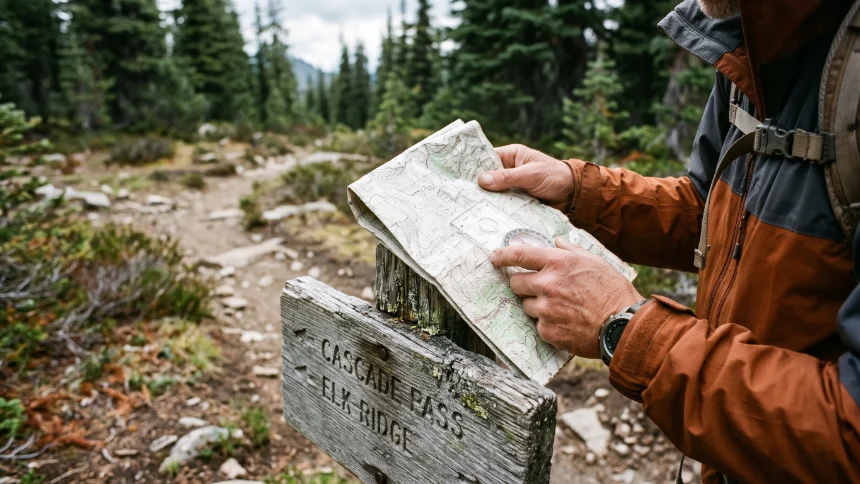
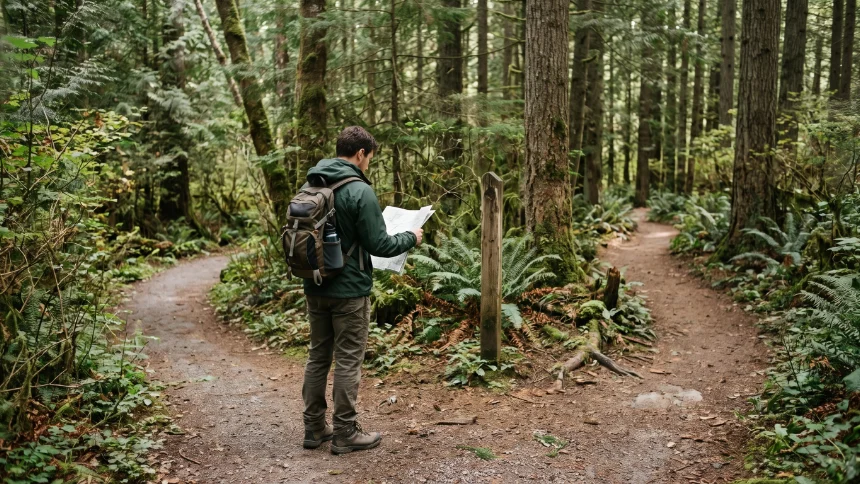
Download maps before leaving home. Bring route notes or a paper map when the trail is unfamiliar, remote, or full of junctions. Keep your phone charged if it is also your camera, map, and emergency contact tool.
At junctions, stop long enough to confirm the direction. It is easier to prevent a wrong turn than to recover from one late in the day.
Watch time, water, and group comfort
Set a turn-around time before the hike. During the trip, pay attention to water supply, daylight, sore feet, group pace, weather changes, and whether anyone is getting quiet or uncomfortable.
Turn around when several small concerns start stacking together. Low water plus late afternoon plus uncertain route is a different situation than any one of those problems alone.
Use stoves and fuel conservatively
For camping, learn your stove before the trip. Follow the stove manufacturer’s instructions and local fire rules. Use stoves only in suitable ventilated areas, keep fuel away from heat and flame, and stop using damaged stove or fuel parts.
Safety note: do not use stoves inside tents. Fire, burns, damaged fabric, and ventilation hazards can become serious quickly.
Common Mistakes
- Choosing a trail from photos without checking distance and elevation.
- Starting late because the route is “only a few miles.”
- Assuming phone signal will be available.
- Ignoring wind, storms, heat, smoke, or overnight lows.
- Carrying safety items but not knowing where they are.
- Continuing toward a destination after the group is tired or uncertain.
- Trying a new stove, tent, or sleep setup for the first time in the dark.
After-Trip Safety Reset
Dry wet gear, remove food residue, recharge lights, replace used first aid supplies, and check damaged straps, buckles, bottles, footwear, or stove parts. This is gear care, but it is also safety preparation for the next trip.
Safety note: this article cannot evaluate your route, health, weather, group, or local hazards. Use official local sources and choose conservative plans.
When To Turn Around Or Get Local Guidance
Turn around if water is running low, someone feels unwell, weather is building, the route is unclear, daylight is getting tight, or the trail feels beyond the group’s comfort. Being close to a destination does not guarantee an easy return.
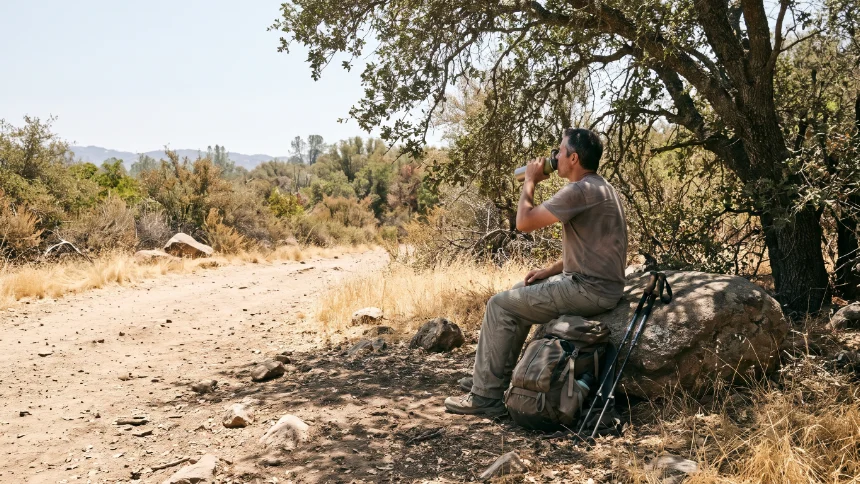
Seek qualified local instruction or official guidance for winter camping, snow travel, desert heat, river crossings, high elevation, remote routes, or any trip with limited exit options. If an emergency is already happening, contact local emergency services as soon as it is safe to do so.
FAQ
What is the most important safety tip for beginner hikers?
Choose a route that matches your current ability, check conditions, share your plan, and turn around before small problems become serious.
Is it safe for beginners to hike alone?
Beginners are usually safer with a companion or group. If hiking alone, choose an easy familiar route and share a clear plan.
What should I do if weather changes quickly?
Reassess early, add layers if appropriate, avoid exposed areas in storms, and turn back if conditions exceed your preparation.
Do short hikes need safety gear?
Yes. Water, food, navigation, a light, a warm layer, first aid basics, and communication can matter when a short hike takes longer.