Ticks on the Trail: What Every Hiker Should Know
Learn how to reduce tick exposure on hiking trails, choose suitable protection, check your body after a hike, and safely remove an attached tick.
A quiet woodland path, a grassy hillside, or a trail through thick vegetation can expose hikers to ticks. These tiny parasites are easy to miss, and some species can transmit diseases. Fortunately, a few simple habits can reduce the chance of a tick attaching to your skin and help you respond appropriately if one does.
Tick prevention is not about avoiding the outdoors. It is about understanding where ticks may be found, protecting exposed skin, checking your clothing and body, and knowing what to do after a bite.
Where Ticks Hide Along Hiking Trails
Ticks may live in wooded areas, tall grass, brush, and leaf litter. They can be present along trail edges, around fallen logs, and in places where wildlife travels. Their activity varies with the region, season, weather, and species.
Before heading out, check local public health guidance or park notices for information about tick activity and tick-borne diseases. A familiar trail is not necessarily tick-free, and a well-maintained path cannot eliminate all exposure.
When possible, walk in the center of established trails rather than brushing against tall grass or overhanging plants. Avoid pushing through dense vegetation when a clear route is available. These choices can reduce contact with places where ticks may be waiting.
Dress to Reduce Exposure
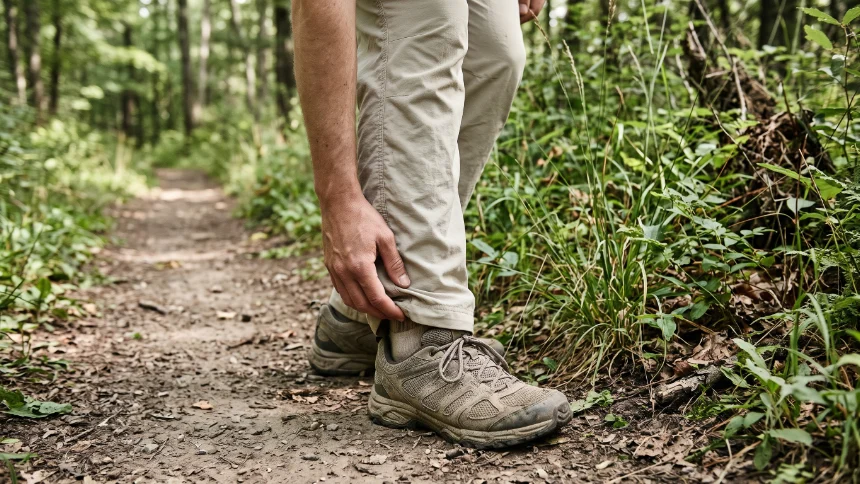
Clothing creates a useful barrier between ticks and your skin. Long trousers, long sleeves, closed footwear, and socks can help reduce exposed areas. Tucking trouser cuffs into socks or boots may make it harder for ticks to crawl directly onto your skin.
Light-colored clothing can make crawling ticks easier to notice. Choose breathable fabrics suitable for the weather, particularly during warm hikes, so that extra coverage does not contribute to overheating.
Some outdoor clothing and equipment can be treated with products containing 0.5% permethrin. Follow the product label precisely. Products intended for treating clothing or equipment should not be applied directly to skin unless specifically labeled for that use. Keep treated items away from children and pets as directed by the label.
Choose Repellents Carefully
An appropriate tick repellent can provide another layer of protection. Depending on your location, products may contain DEET, picaridin, IR3535, or other registered active ingredients. Some products containing oil of lemon eucalyptus or its derivative PMD may also be labeled for tick protection.
Read the label before applying any product. Check that it specifically protects against ticks, and follow its instructions for application, reapplication, age restrictions, and areas of use. Do not assume every mosquito repellent offers equivalent protection against ticks.
Repellent works best alongside protective clothing and regular tick checks. It should not be treated as a guarantee that you will avoid bites.
Make Quick Checks Part of Your Hike
During breaks, look over your clothing for ticks, especially around trouser cuffs, socks, waistbands, and sleeve openings. If you have brushed against vegetation, inspect your clothing before continuing. Remove any unattached ticks you find.
Check your backpack and other equipment if they have been placed in grass or leaf litter. If you hike with a dog, inspect your pet as well and use a tick-prevention product recommended for that animal by a veterinarian.
These brief checks are useful, but they do not replace a thorough examination after the hike. Ticks can be very small and may crawl for some time before attaching.
After the Hike: Check from Head to Toe
Once you return home, change out of your hiking clothes and inspect your entire body in good lighting. Use a hand mirror or full-length mirror where helpful, and ask someone to check areas you cannot easily see.
Pay particular attention to the scalp and hairline, around and behind the ears, under the arms, inside the belly button, around the waist, behind the knees, and around the groin. Ticks can attach anywhere, so do not limit your inspection to exposed skin.
Showering soon after coming indoors can help wash away unattached ticks and provide an opportunity to check your skin. Inspect your clothing and gear, too. The U.S. Centers for Disease Control and Prevention advises tumble drying dry clothing on high heat for 10 minutes to kill ticks; damp clothing may require additional time. Follow garment care instructions and local public health advice.
If You Find a Tick Attached to Your Skin
Remove an attached tick promptly. You do not need to wait for a medical appointment simply to begin removal.
-
Use clean, fine-tipped tweezers to grasp the tick as close to the skin as possible.
-
Pull upward with steady, even pressure. Do not twist, jerk, or squeeze the tick’s body.
-
Clean the bite area and your hands with soap and water or rubbing alcohol.
-
Dispose of the tick safely, such as in a sealed container or securely wrapped in tape.
-
Check the rest of your body for additional ticks.
Avoid using heat, nail polish, petroleum jelly, or other substances to make the tick detach. These approaches are not recommended and may delay removal. If small mouthparts remain and cannot be removed easily with clean tweezers, do not dig deeply into your skin.
See the CDC tick bite guidance for current removal and follow-up advice.
Symptoms Worth Taking Seriously
Not every tick bite causes illness, but monitor your health after a possible exposure. Depending on the region and the disease involved, symptoms may include fever, headache, fatigue, muscle or joint pain, or a new rash.
Seek medical advice if these symptoms develop in the days or weeks after a tick bite or possible exposure. Tell the healthcare professional where you hiked, when the exposure occurred, and whether you found an attached tick. Do not assume that the absence of a rash means you are free of infection.
Some tick-borne illnesses can be treated more effectively when care begins early. Local risks differ, so follow guidance from your area’s public health authority. If you become seriously ill, seek urgent medical attention.
A Simple Routine for Every Trail
Before hiking, check local tick information, prepare suitable clothing, and select a repellent that is labeled for tick protection. On the trail, avoid unnecessary contact with brush and inspect your clothing during breaks. Afterward, check your body, clothes, gear, and pets.
These habits cannot eliminate every risk, but they make tick exposure easier to manage. A few minutes of prevention and a careful post-hike check can help you spend more time enjoying the outdoors with greater confidence.